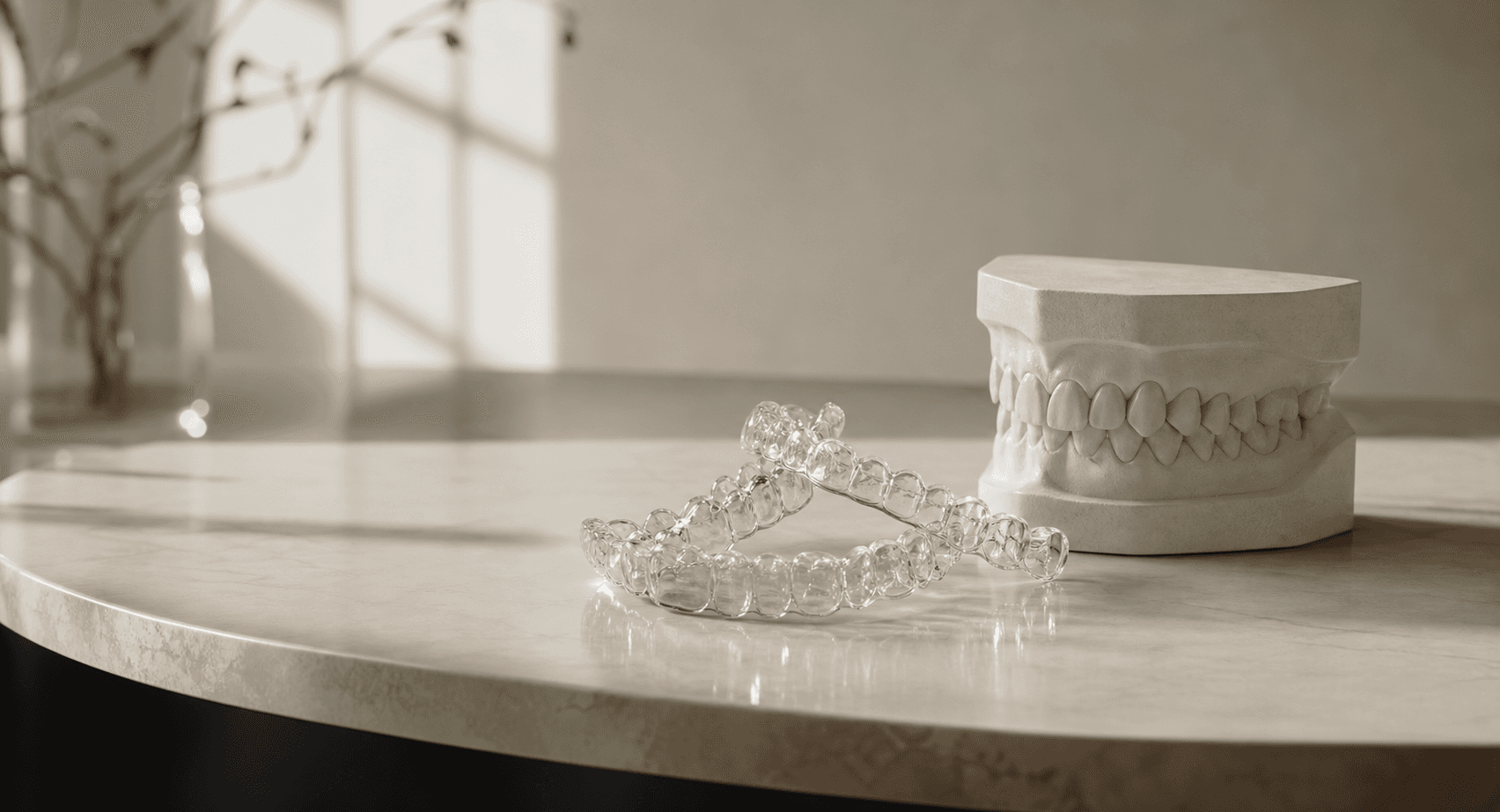
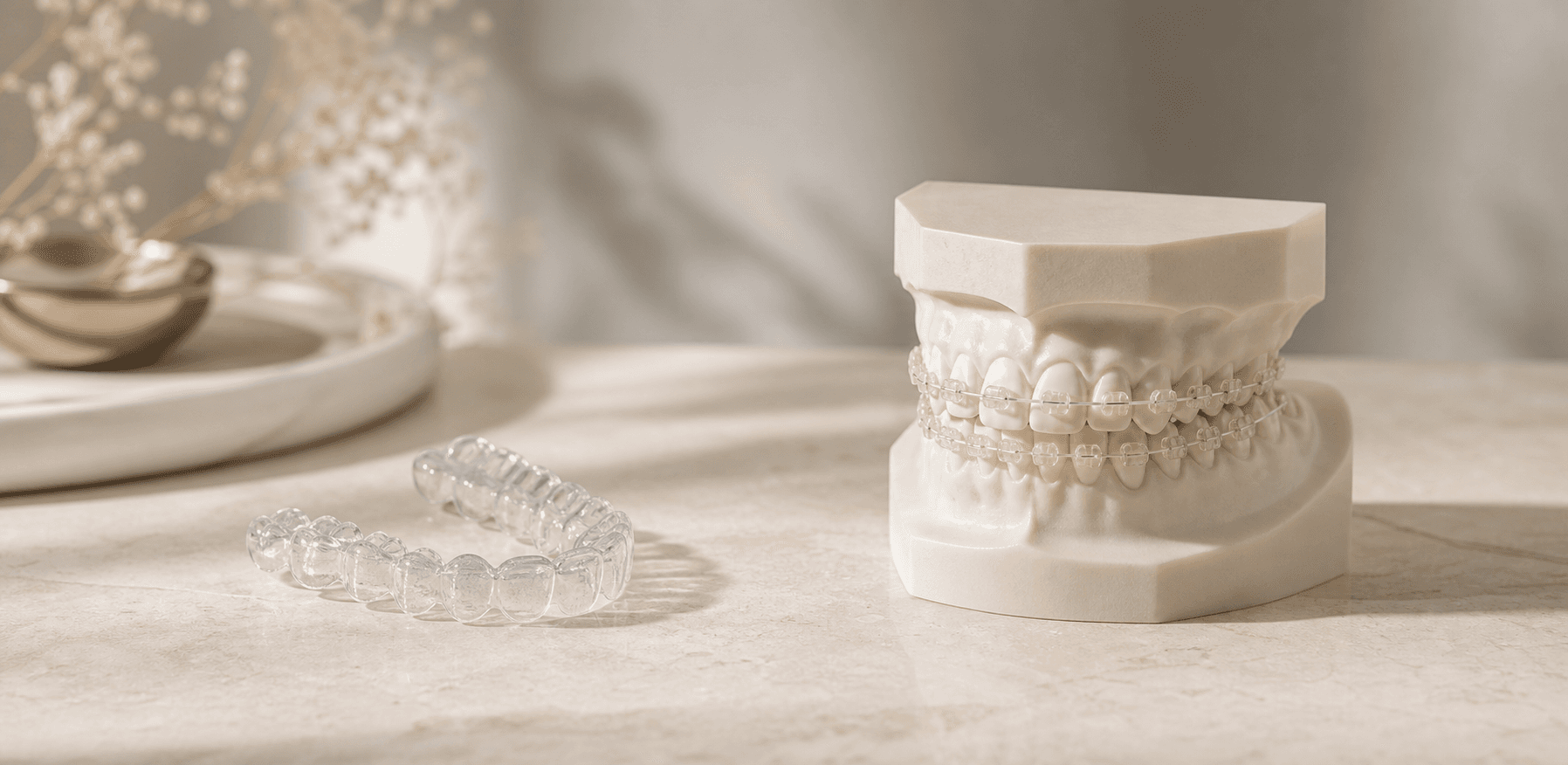
More adults are straightening their teeth than at almost any point before, and most of that growth is thanks to clear aligners like Invisalign. But "clear aligners are popular now" is not the same as "clear aligners are right for everyone," and the honest answer to Invisalign versus braces depends less on which one is trendier and more on your specific bite, your daily habits, and how much discipline you can realistically bring to the process.
This is not a sales pitch for one option over the other. Both approaches move teeth effectively when used correctly. What follows is a straightforward comparison of how they actually differ in day-to-day life as an adult, along with where each one has real limits worth knowing before you commit.
What actually differs, beyond the obvious
The most visible difference is appearance — clear aligners are far less noticeable than metal brackets and wires, which is a genuine factor for adults in client-facing jobs or who simply do not want a mouth full of metal at this stage of life. But visibility is only one piece of a bigger set of differences that matter more once treatment actually starts.
Braces are fixed to your teeth and do their job continuously, whether you think about them or not. Aligners are removable, which is both their biggest advantage and their biggest risk. That single distinction — fixed versus removable — is really what the rest of this comparison comes down to.
The lifestyle case for aligners
Because aligners come out, there is no adjustment to eating. You are not avoiding popcorn, nuts, or anything sticky the way you might with braces — you simply take the tray out, eat normally, brush, and put it back in. Cleaning your teeth also stays close to your normal routine, without navigating brackets and wires with special tools.
For adults who travel for work, attend client meetings, or are simply not interested in a visibly "in-treatment" look for a year or more, this matters. Many adults also find aligners more comfortable day to day, since there are no wires or brackets to irritate the inside of the cheeks and lips, though switching to a new tray can bring a couple of days of pressure as teeth begin to shift.
The discipline that aligners require
Here is the part that gets glossed over in a lot of marketing: aligners only work if you actually wear them. The recommended wear time is typically around 20 to 22 hours a day, which means they come out for meals and cleaning and go straight back in — not "most of the day" or "whenever convenient." Falling short of that consistently is the single most common reason aligner treatment runs longer than planned or does not track to the intended result.
This is where being honest with yourself matters more than it does with braces. If you know you are the type of person who will forget a tray at a restaurant, skip putting it back in after a late dinner, or lose track of the case, that is worth factoring into the decision. Braces remove that variable entirely, because there is nothing to remember to put back in — the appliance is simply always there, working, whether you think about it or not.
None of this is a moral judgment. Life is genuinely busier for some adults than others, and travel, irregular schedules, and social eating all make consistent aligner wear harder for some people than others. It is simply a real trade-off worth naming rather than glossing over.
Where case complexity sets real limits
Aligners handle a wide range of common concerns well — crowding, spacing, and mild-to-moderate rotations respond predictably to the kind of gentle, staged movement aligners are designed for. Where they run into real limits is with more complex bite problems: significant misalignment between upper and lower jaws, teeth that need to be moved vertically rather than just shifted side to side, or severe rotations on certain tooth shapes that plastic trays struggle to grip and turn effectively.
This is not a marketing caveat, it is a mechanical one. Braces apply continuous, more varied force through brackets and wires, which gives them an edge on certain types of complex movement that aligners cannot always match, even with the small tooth-coloured attachments sometimes added to help aligners grip. An honest consultation will tell you plainly if your bite falls into the category where braces are likely to get a more predictable result, rather than trying to make aligners work for a case they are not well suited to.
It is also worth knowing that some cases start with aligners and are later adjusted, or vice versa, if progress is not tracking as expected. A good sign of a well-run aligner case is regular check-ins where your dentist confirms your teeth are moving as planned, not just an initial scan and then silence until the end.
Retention: the step both options share
This part is identical no matter which route you take. Teeth naturally tend to drift back toward their original position over time, driven by the same soft-tissue and bone forces that shaped your bite in the first place. Whether you finish with braces or aligners, a retainer afterward is what protects the result, and skipping it is the most common reason a good outcome slowly reverses over the following years.
Retainers typically mean full-time wear for a period after treatment ends, tapering down to nights only over time, though the specifics depend on your case and your dentist's recommendation. Adults sometimes assume retention is a formality once the "real" treatment is done, but it is genuinely the step that determines whether the investment of time holds up for years or fades within a couple of them.
Making the honest choice for your bite and your life
There is no universally correct answer between Invisalign and braces for adults — there is only the answer that fits your specific bite and how realistically you can commit to the discipline aligners require. A straightforward case paired with a patient who will reliably wear their trays is often an excellent fit for aligners. A complex bite, or a lifestyle where consistent wear is genuinely unlikely, may point toward braces instead, or occasionally a combination approach.
The best place to find that answer is a consultation with a digital scan of your teeth, which lets your dentist show you honestly what each option would involve for your specific case, not a generic version of either treatment. If straightening your teeth as an adult is something you have been considering, that conversation is a low-pressure way to see where you actually stand.