
Metal & Ceramic Braces
Braces in Scarborough
Straighten crowded, gapped, or uneven teeth with metal or ceramic braces, for children, teens, and adults alike.
Braces gradually guide teeth into a straighter, healthier position using brackets and wires that stay on the teeth throughout treatment. At Cedarbrae Dental Center on Lawrence Ave East, Dr. Ghazala Zaid, our principal dentist, has a clinical interest in braces and can talk you through whether they suit your smile. We see families seven days a week.
Open 7 days a week, including Saturdays and Sundays.

Braces for children, teens, and adults
Braces are one of the most dependable ways to move teeth into a better position. Small brackets are attached to each tooth and connected by a thin wire, and over a series of visits that wire is adjusted so it applies gentle, steady pressure. Because the brackets stay put day and night, braces keep working without depending on you to remember to put anything back in, which is part of why they handle even complicated cases so reliably.
At Cedarbrae Dental Center we offer both metal and ceramic braces. Metal braces are the familiar, hard-wearing option, with small stainless-steel brackets that suit patients of every age. Ceramic braces use tooth-coloured brackets that blend in more with your natural teeth, so they are less noticeable from a distance, a difference many older teens and adults care about. Both work on the same principle; the choice is mostly about appearance, budget, and how your teeth need to move.
Braces are not only for children and teenagers. Adults make up a growing share of the people asking about straighter teeth, whether to correct crowding that has worsened over the years, to close a gap, or to fix a bite that never quite settled. Dr. Ghazala Zaid, our principal dentist, has a clinical interest in braces and orthodontic treatment, and she takes time to explain what braces could and could not achieve for your particular situation before anything is decided.
Braces or Invisalign: an honest comparison
The most common question people ask is whether braces or clear aligners like Invisalign are the better choice. The honest answer is that it depends on your teeth and your priorities, and part of a good consultation is talking that through rather than steering you toward one by default. Both move teeth gradually into place; they simply go about it in different ways.
Braces are fixed to the teeth, so they work continuously and can manage more involved movements, including significant rotations and bite corrections, without relying on your wear discipline. The trade-off is that they are visible, call for some care around food and cleaning, and cannot be taken off until treatment is complete. Invisalign uses a series of clear, removable trays that are far less noticeable and come out to eat and brush, but they only work while they are actually in your mouth, which asks for real consistency, and some complex cases are still better suited to braces.
For many patients either approach could work, and the decision comes down to how visible the appliance is, how disciplined you expect to be, and the kind of movement your teeth need. We are happy to lay out the pros and cons of each side by side, and if clear aligners turn out to fit your goals better, we will tell you so plainly.
Have questions about braces? Talk to us — we're open 7 days a week.
Request AppointmentWhat braces treatment involves
Consultation and records
We start by examining your teeth and bite and taking records, including digital X-rays, so we can see how the teeth and roots sit. From this we map out how your teeth need to move and discuss whether metal or ceramic braces, or clear aligners, best fit your case and your goals.
Fitting your braces
At the bonding visit, each bracket is attached to a tooth with a dental adhesive and the connecting wire is put in place. Nothing about this step is painful, though it takes a little time to place each bracket carefully. We then show you how to look after the braces day to day.
Adjustment visits
Every few weeks you come in for a short adjustment, where the wire is changed or tightened to keep your teeth moving to plan. These regular check-ins are how progress is steered, and they are also when we answer questions and sort out any bracket that has come loose.
Removal and retainers
Once your teeth have reached their planned position, the braces come off and the teeth are cleaned and polished. Because teeth naturally tend to drift over time, you then move to a retainer that holds the new alignment in place, worn full-time at first and usually just at night later on.
Who braces can help
Braces address a wide range of alignment and bite concerns. They tend to suit:
- Children and teens whose adult teeth have come in crowded, gapped, or crooked
- Adults who never had orthodontic treatment, or whose teeth have shifted since
- Teeth that are significantly rotated or tilted and need firm, continuous guidance
- Bites that do not meet properly, where the upper and lower teeth line up poorly
- Anyone who would rather not rely on remembering to wear a removable appliance
- Patients whose case is too involved for clear aligners to manage well
The honest benefits and trade-offs
Benefits
- Reliable, continuous tooth movement that works without daily discipline from you
- Able to handle complex crowding, rotations, and bite corrections
- Straighter teeth are easier to clean, which supports long-term gum and tooth health
- Ceramic brackets offer a more discreet look than traditional metal
Honest limits
- Braces are visible, and metal brackets more so than ceramic
- Sticky, hard, and very chewy foods need to be avoided to protect the brackets
- Cleaning takes more effort, since food and plaque gather around brackets and wires
- You cannot take them off, so the commitment runs for the whole treatment period
What affects the cost of braces
The cost of braces depends mostly on how much your teeth need to move and how long you will be in treatment. A limited correction is different from a full realignment of both arches, so we give you a clear written estimate after your consultation rather than a number over the phone.
- How complex the movement is and how long treatment is expected to take
- Whether you choose metal or ceramic brackets
- The number of adjustment visits your plan calls for
- The retainers you wear afterward to hold the result
A short case that corrects only a few teeth generally costs less than a full correction of both arches. Many dental plans include some orthodontic coverage, often with a lifetime maximum, and we help you check what your plan may contribute. We can also talk through Canadian Dental Care Plan eligibility. You always receive an exact written quote after your consultation, before treatment begins.
Learn more about using your dental insurance or the Canadian Dental Care Plan.
Insurance, CDCP, and payment
Orthodontic treatment such as braces is covered in part by many dental plans, though the amount and any lifetime maximum vary from plan to plan, and coverage can differ for children and adults. Our front-desk team can help you check your plan and understand what it may contribute before you commit to anything.
If you are exploring the Canadian Dental Care Plan, we can talk through what it may include for your situation without promising a specific outcome, since that depends on your eligibility. Either way, you will have a clear written estimate up front, so you can plan with confidence rather than guessing at the numbers.
Frequently asked questions
Reading for your braces questions
Explore care questions and relevant treatment comparisons before your appointment.
Related treatments
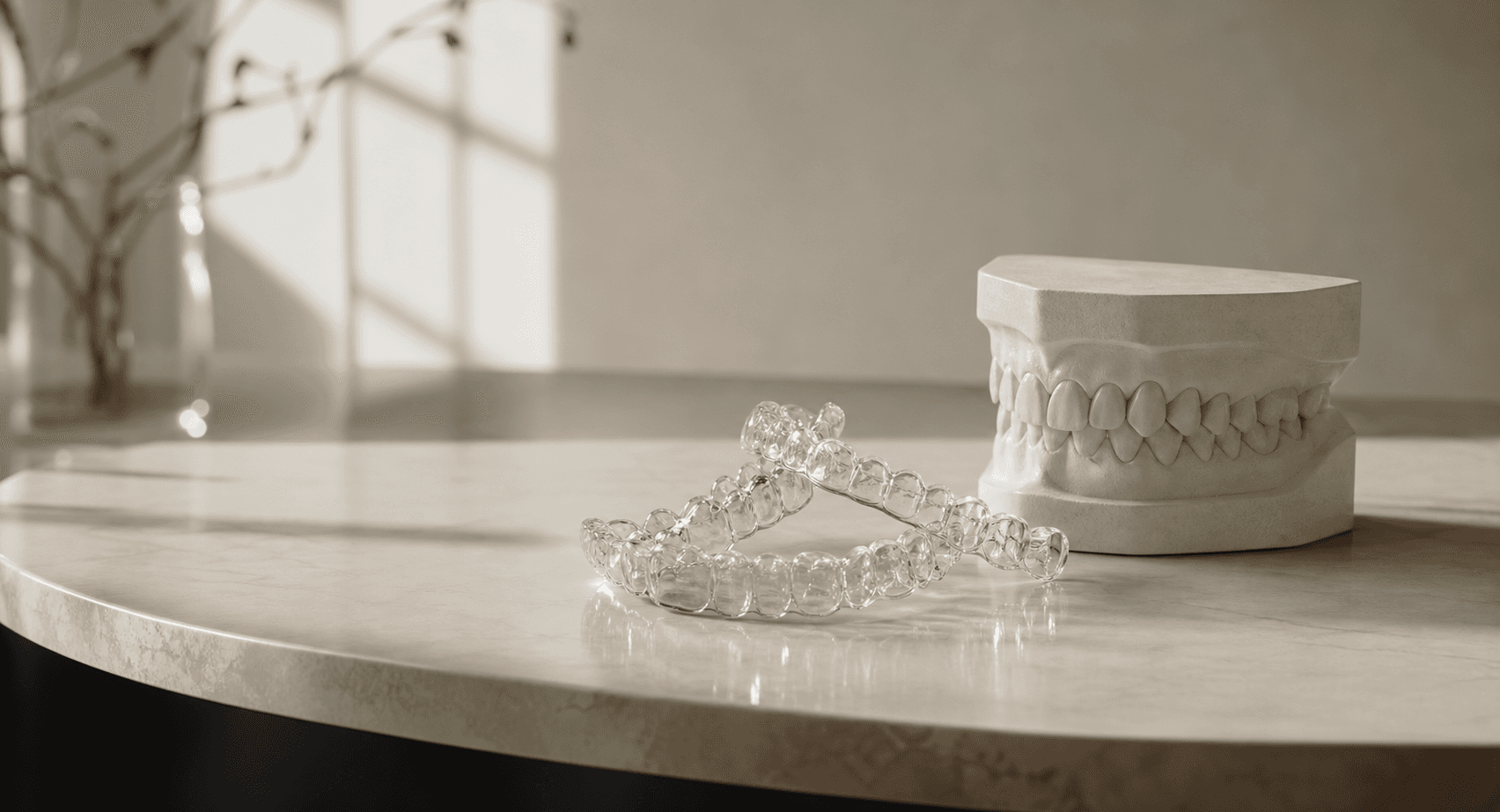
Invisalign
Straighten your teeth with a series of clear, removable aligners planned from a digital scan of your smile.
Learn more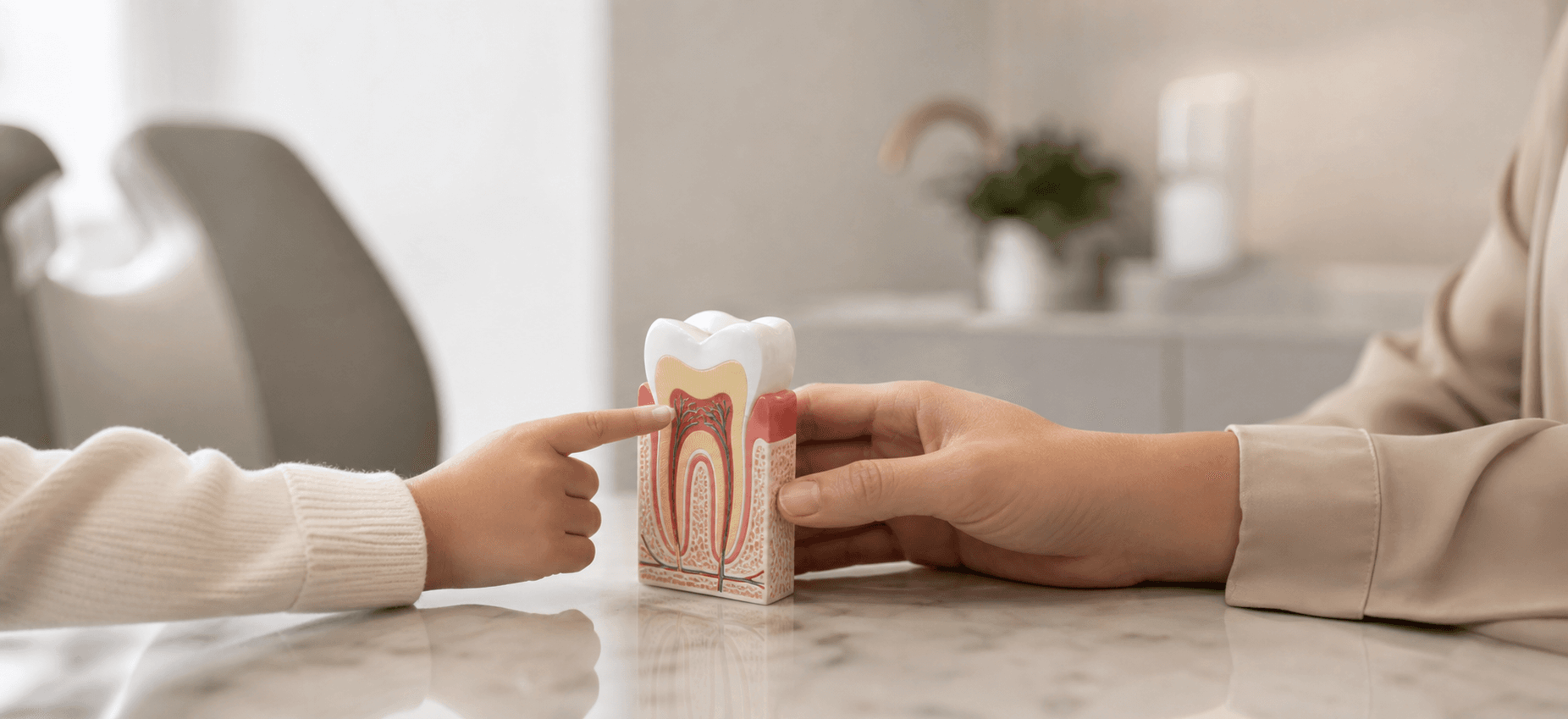
Children's Dentistry
Gentle, unhurried dental care that helps your child grow up feeling at ease in the chair.
Learn more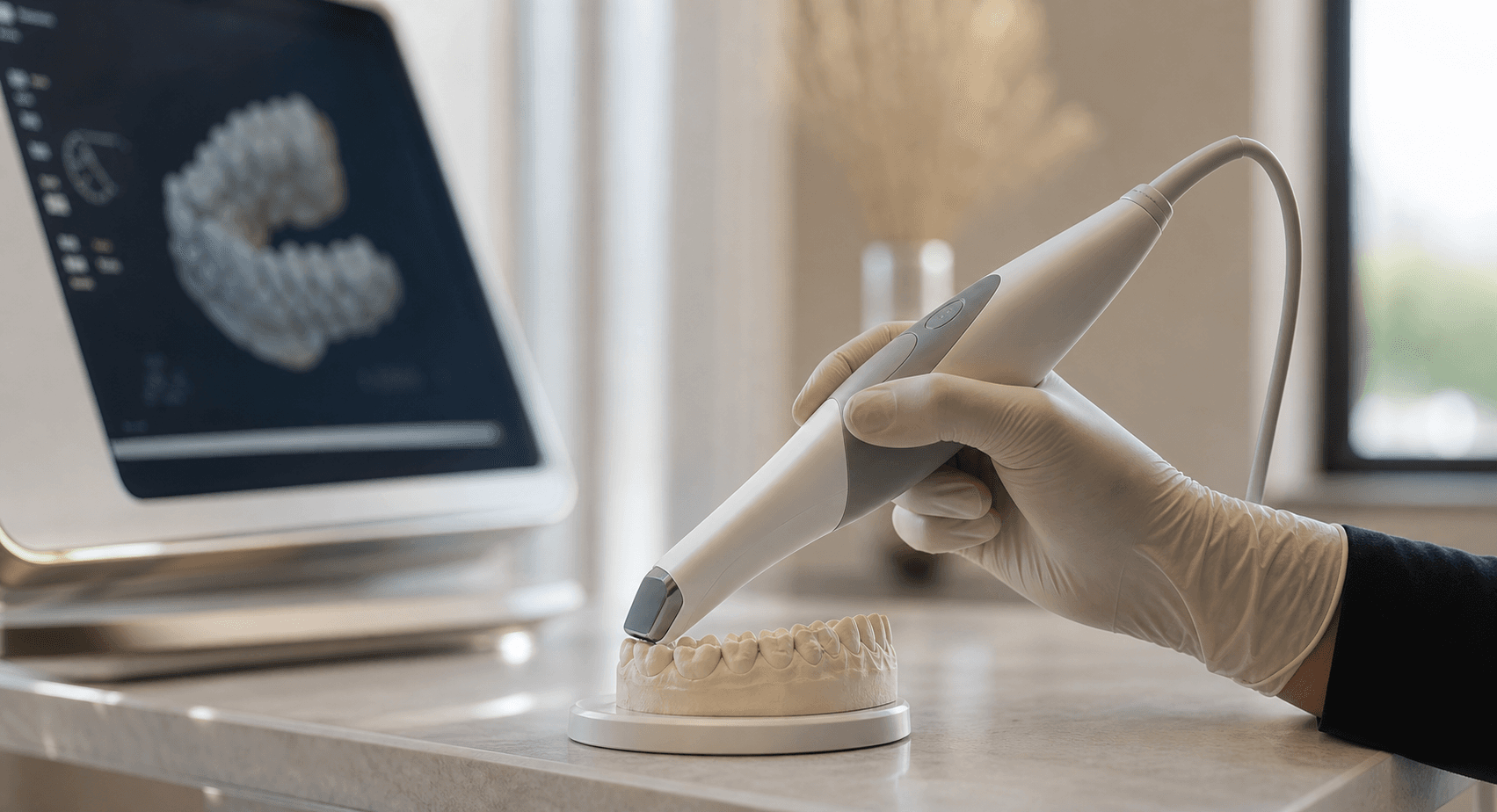
Dental Exams & Checkups
A thorough look at your teeth, gums, and bite, so small issues stay small.
Learn moreReady to talk about braces?
Straighten crowded, gapped, or uneven teeth with metal or ceramic braces, for children, teens, and adults alike.