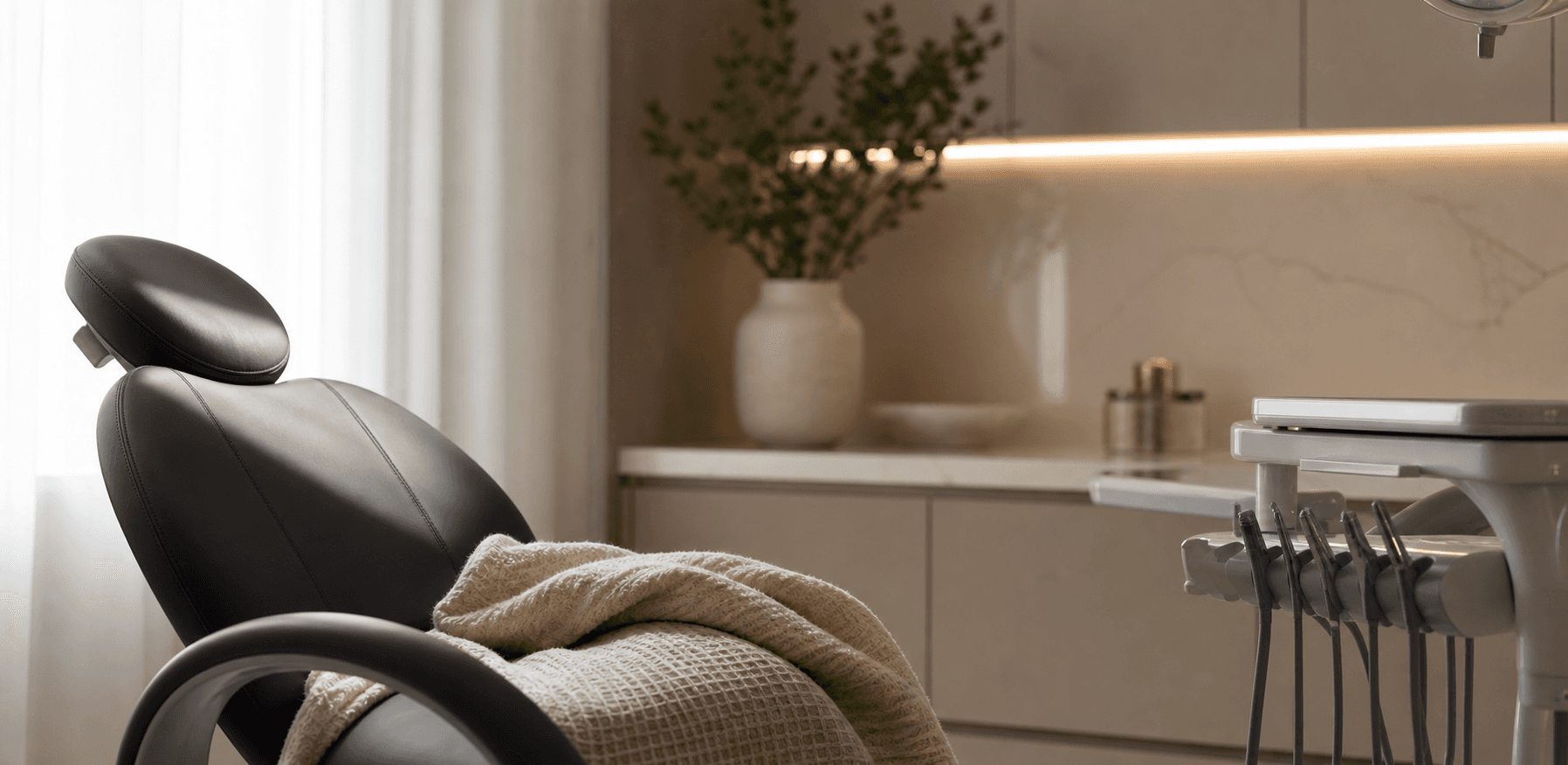

If the thought of a dental appointment makes your stomach tighten, you are far from alone. Dental anxiety is one of the most common reasons people delay care, and it shows up in all kinds of ways — a racing heart in the waiting room, dread that starts days before the visit, or simply years of avoidance that quietly stack up.
None of that needs an explanation or an apology. This guide walks through why dental anxiety happens, what a comfort-first visit can look like in practice, and how small, deliberate steps can make the next appointment easier than the last one.
Why dental anxiety happens
Dental anxiety rarely comes from nowhere. For many people it traces back to a specific memory — a painful procedure as a child, a rushed appointment, a dentist who did not explain what was happening before it happened. For others, it is less about a single event and more about the setting itself: the sound of a drill, the smell of the office, the feeling of lying back with your mouth open and no easy way to speak up.
A loss of control is often at the center of it. In a dental chair, you cannot see what is happening, you cannot easily ask a mid-procedure question, and you are relying entirely on someone else to pace things appropriately. That is a genuinely uncomfortable position for anyone, and it is a completely reasonable thing to feel anxious about.
It also compounds over time. Skipping a checkup because of anxiety can mean a small issue turns into a bigger one, which then requires a more involved appointment, which then feels even harder to face than the one you avoided. Recognizing that cycle is often the first step toward breaking it, and it is worth saying clearly: coming back after a long gap is common, not something that needs defending.
Naming what actually triggers you
General anxiety about the dentist is hard to plan around. Specific triggers are much easier to manage, both for you and for the team treating you. Before your next visit, it can help to think through what part of the experience is hardest — is it the noise of instruments, the numbing injection, the sensation of not being able to swallow easily, or simply not knowing how long a procedure will take?
Some people find it easier to write this down rather than say it out loud on the spot. A short note at booking, or a few minutes at the start of your appointment, gives your dentist something concrete to work with instead of a general sense that you are nervous. 'I need to know before you touch a specific tooth' is a plan. 'I don't like the dentist' is a feeling that is harder to act on.
It also helps to separate anxiety about the visit itself from anxiety about what might be found. Some people are less afraid of the chair than of hearing bad news about a tooth. If that sounds like you, it is worth saying so directly — a dentist who knows you are bracing for bad news can walk you through findings more gently and avoid surprising you mid-exam.
What a comfort-first visit looks like
A comfort-first approach starts before you are even in the chair. It usually begins with a conversation: what has made past visits difficult, what would make this one easier, and whether there is anything specific you want your dentist to avoid doing without warning you first. That conversation shapes the whole appointment rather than being an afterthought.
During treatment, pacing matters as much as technique. A dentist working with an anxious patient will typically explain each step before it happens, check in more frequently, and be willing to slow down or pause if something feels like too much. None of this requires special equipment — it is simply a different way of running the visit.
Where appropriate, sedation options can also be part of the conversation, and they are genuinely discussed rather than defaulted to. What is appropriate depends on your health history and the procedure involved, so this is something your dentist reviews with you individually rather than offering as a blanket solution. For some people, pacing and communication alone make the difference; for others, discussing a sedation option at consultation is worth raising.
A simple signal system gives you back control
One of the most effective tools for dental anxiety is also one of the simplest: agreeing on a stop signal before treatment begins. Raising a hand, tapping the armrest, or any gesture you choose tells your dentist to pause immediately, no explanation needed in the moment.
This matters because it restores a small but real sense of control. You are not just hoping the appointment goes smoothly — you have an agreed way to interrupt it if it does not. Most people who use a stop signal report needing it less often than they expected, simply because knowing it is available reduces the underlying tension.
If a signal system is new to you, mention it when you book or at the very start of your visit. It takes seconds to agree on and can change how the rest of the appointment feels.
Building up gradually rather than all at once
If it has been years since your last visit, there is no requirement to tackle everything in a single appointment. A first visit back can simply be a conversation and a gentle exam, with any necessary treatment scheduled separately once you have a better sense of what to expect. Breaking things into smaller steps is a legitimate strategy, not a sign that you are being difficult.
Booking flexibility also helps more than people expect. Cedarbrae Dental Center is open seven days a week, including full daytime hours on Saturdays and Sundays, which makes it easier to choose a time when you are not rushed or already stressed from your day. Coming in when you are not squeezing an appointment between other obligations can make a noticeable difference in how the visit feels.
Bringing a support person, headphones for music, or simply asking for a few extra minutes before you get in the chair are all reasonable requests. None of these need to be negotiated or justified — they are part of building a visit that works for you.
Talking to your dentist about it
The most useful thing you can do is say it plainly: 'I have dental anxiety.' You do not need to explain why, rank how severe it is, or apologize for it taking up part of the appointment. A dental team that takes comfort seriously will use that information to plan the visit differently, not to judge how you got there.
If a past appointment somewhere else went badly, it is worth mentioning what specifically happened, even briefly. A dentist who knows you had a bad experience with an injection, for example, can talk through numbing options differently than if they are simply told 'the last place was bad.'
It is also worth knowing that this is an ongoing conversation, not a one-time disclosure. What helps you at one visit might need adjusting at the next, and a good comfort-first relationship with a dental team develops over more than one appointment. If sedation or additional comfort measures feel like they are worth discussing for an upcoming procedure, that conversation can happen at consultation, with your health history and the specific treatment guiding what is appropriate.
If anxiety has been keeping you from booking at all, starting with a low-pressure conversation about sedation dentistry and what comfort-focused options actually involve is a reasonable first step, well before any treatment date is on the calendar.