
Cosmetic care · Patient education
Caring for dental bonding, including a new chip
Learn what to ask after composite bonding, how to discuss a chipped repair and why a damaged edge does not automatically mean full replacement.
Clinically reviewed by Dr. Ghazala Zaid · 2026-09-13
Published
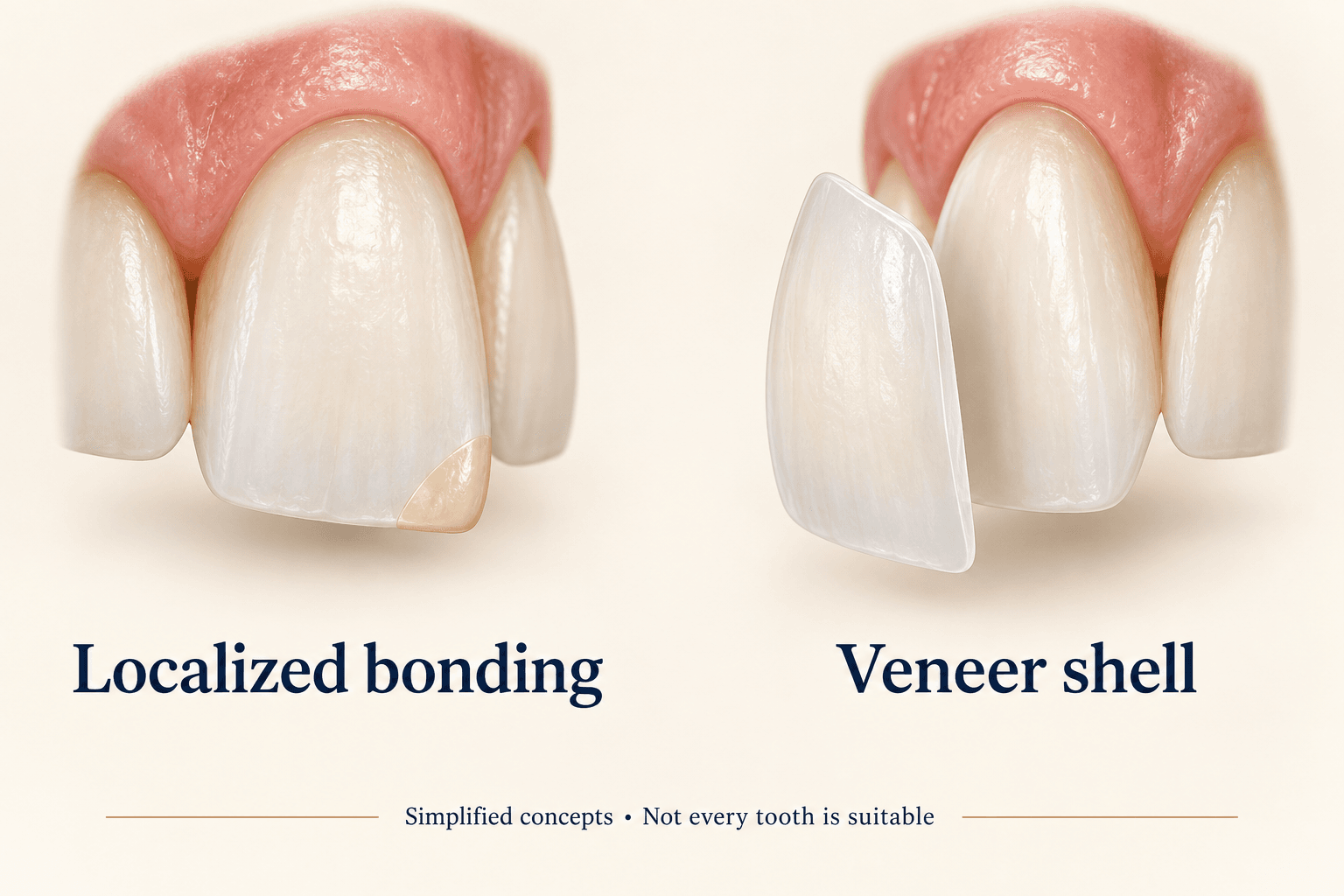
- 1. Localized composite
- 2. Veneer
Labels run left to right. AI-generated teaching illustration. Simplified concepts. Not every tooth is suitable.
Dental bonding uses tooth-coloured composite resin to change or repair part of a tooth. Once the appointment is over, the practical questions begin: what should feel normal, how should you clean the area and what happens if the edge chips again?
The answer is not that you must stop using the tooth, nor that the repair is indestructible. Ask for care instructions suited to the repair and the reason it was needed. Our bonding information explains the treatment; this guide helps you prepare for its ongoing care.
Start with a clear handover
Before leaving, ask which part of the tooth has been restored and whether any special instructions apply. Mention a bite that feels different, an edge that catches your tongue or a space that is difficult to clean. Ask whom to contact if a concern develops later, rather than trying to file or reshape the repair at home.
The Canadian Dental Association describes composite bonding as resin that is applied, shaped, hardened and polished. Its appearance should not distract from the underlying tooth: a cosmetic repair still needs an appropriate care and review plan.
If you were given temporary restrictions, ask when they end and why. Do not rely on another patient’s instructions, which may refer to a different material, a larger repair or anaesthetic recovery.
Make everyday care practical
Ask the dental team to show you how to clean the repaired tooth and the spaces beside it. Bring up any difficulty with the shape or with floss catching. Continue the recommended professional cleaning schedule and explain any changes you notice between visits.
Avoid using teeth as tools to open packaging or bite hard objects. For composite veneers, the ADA’s care guidance also emphasizes daily cleaning and avoiding habits such as chewing fingernails or hard objects. Ask which advice applies to your smaller bonded repair rather than assuming every restoration has identical needs.
If grinding or clenching is a concern, mention it at review. The question is whether it affects your tooth and repair, not whether everyone needs the same protective appliance.
If something chips, assess the cause
A visible chip does not reveal how much of the underlying tooth or restoration is affected. Contact a dentist for assessment, particularly if there is pain or a recent injury. Do not glue the piece back, sand the edge or assume that a cosmetic appointment is all that is needed.
Prepare this short handover:
| What to note | Why it helps the discussion |
|---|---|
| When you first noticed the change | Establishes the sequence |
| Whether an injury or biting event occurred | Gives context without diagnosing the cause |
| Any pain, sharpness or altered bite | Helps describe the current problem |
| Previous repair history | Helps the clinician compare earlier work |
The FDI World Dental Federation supports assessing restoration repair case by case. Ask whether the defect can be repaired locally, whether replacement is needed and what would address the cause. A larger procedure is not automatically better, but another small patch is not automatically suitable either.
Common questions
Does a chip mean the whole bonding must be replaced?
Not necessarily. Ask what remains sound, what caused the defect and which repair or replacement choices are reasonable.
Can whitening freshen the colour of bonding?
Whitening does not bleach a restoration like natural tooth structure, as the CDA explains. Discuss shade concerns before using whitening products or replacing dental work.
How long will my repair last?
There is no individual lifespan guarantee. Ask how the size, position, bite and care needs of your repair affect the outlook and review plan.
For an assessment, request an appointment. If the problem is urgent, use our emergency dental information and call about availability rather than waiting for an online request to be confirmed.
Sources
- CDA: Bonding and veneers, checked 2026-09-13.
- ADA MouthHealthy: Veneers, including composite and care, checked 2026-09-13.
- FDI: Repair of restorations, checked 2026-09-13.
- CDA: Teeth bleaching and restorations, checked 2026-09-13.
Understand what makes sense for you.
Bring your questions to Cedarbrae Dental Center in Scarborough. We can assess your needs and discuss appropriate options. An appointment request is not a confirmed booking.