
Cleaning & gums · Patient education
What Do Gum Measurements Mean, and Why Do Maintenance Visits Continue?
During a dental visit, you may hear the clinician calling out numbers around your teeth. Those measurements help describe your gum health, but they are not…
Clinically reviewed by Dr. Ghazala Zaid · 2026-09-13
Published
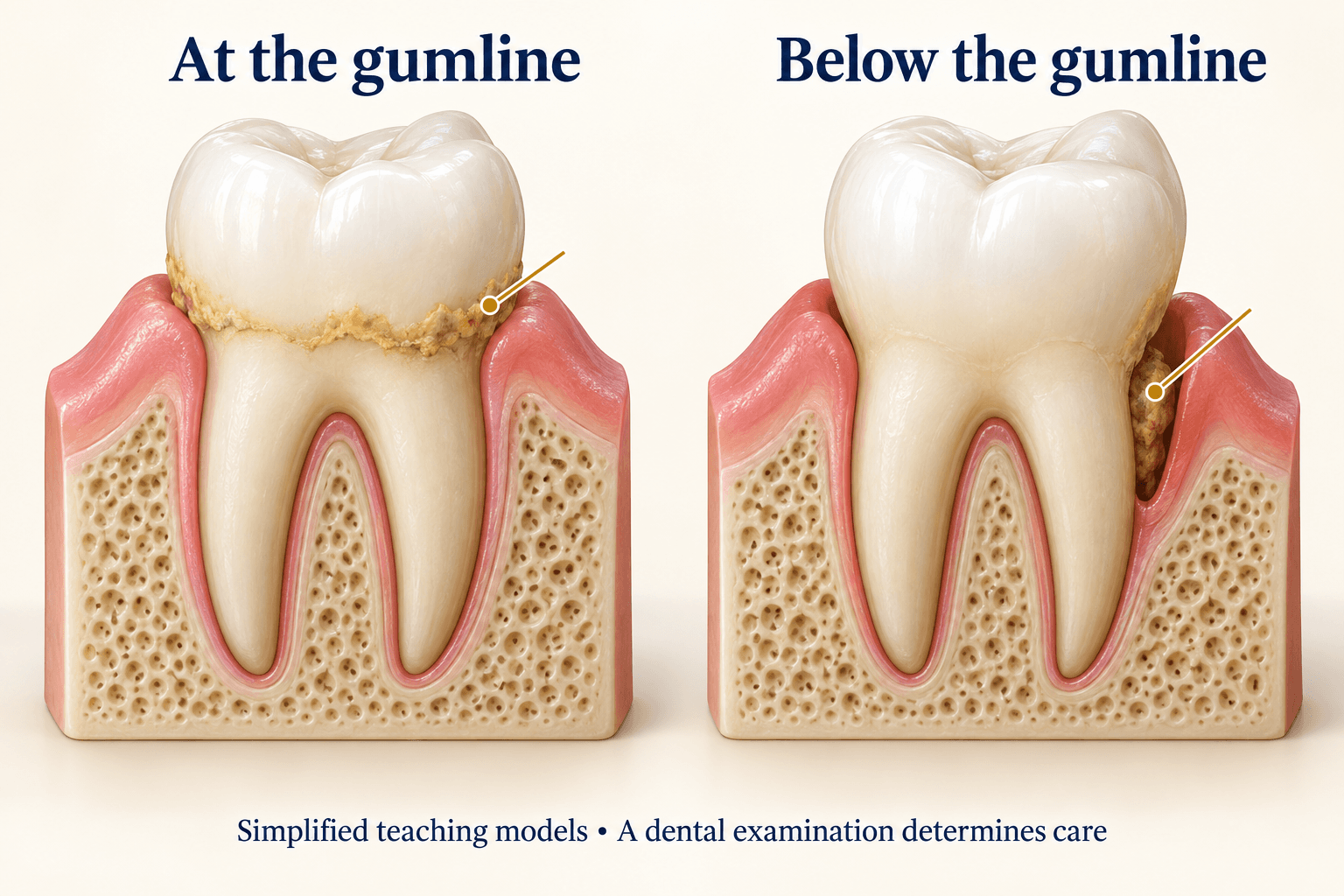
- 1. At the gumline
- 2. Below the gumline
Labels run left to right. AI-generated teaching illustration. A dental examination determines care. Simplified anatomy, not to scale.
During a dental visit, you may hear the clinician calling out numbers around your teeth. Those measurements help describe your gum health, but they are not a scorecard for how hard you brush. They are part of a clinical record that can be compared with other findings and later appointments.
If you are receiving gum-disease treatment, understanding that record can make follow-up recommendations less mysterious. You do not need to memorize ideal numbers. You need to understand what the findings mean for your own care.
Measurements are pieces of a larger picture
A periodontal probe measures the space between a tooth and the surrounding gum. The clinician may also record bleeding, recession, tooth movement and other findings, with imaging when indicated. Periodontal assessment and reassessment use several indicators rather than relying on one reading alone. St George's NHS: periodontal treatment protocol.
| Term you may hear | Plain-language meaning | A helpful question |
|---|---|---|
| Pocket depth | Depth of the measured space beside a tooth | Which sites concern you, and why? |
| Bleeding on probing | Bleeding noticed during measurement | How does this affect the assessment? |
| Recession | The gum margin has moved away from its earlier position | Is this related to my other findings? |
| Attachment or bone support | Information about the tissues supporting a tooth | What do the exam and images show together? |
Do not try to probe your own gums. A chart or image viewed online cannot establish your diagnosis. Ask the clinician to translate the pattern of findings into a short explanation, including what is known and what needs monitoring.
Why feeling better does not end the plan
Gum disease can exist without obvious pain. Gingivitis affects the gums; periodontitis involves damage to supporting tissues and bone. Treatment depends on the condition and how far it has progressed. ADA: gum disease.
After initial treatment, a reassessment helps the team judge the response and decide whether further care is needed. Maintenance is ongoing support, not a claim that the earlier treatment failed. It may include reviewing home care, cleaning areas that need attention and updating clinical measurements. St George's NHS: periodontal treatment protocol.
Ask why your recommended interval differs from a friend's routine teeth-cleaning schedule. An individualized explanation is more useful than assuming that everyone belongs on the same timetable.
Turn your chart into questions you can use
Before leaving, ask which areas are improving, which need attention and when the next comparison will happen. Request a demonstration of cleaning around a difficult area instead of guessing at a new technique. Tell the team if a suggested tool is painful, hard to grip or difficult to fit into your day.
Also mention changes in your health or medication. Do not change prescribed medicine yourself because you suspect a gum-related effect. Bring questions to the treating clinician.
Persistent bleeding needs assessment. New swelling, pus or worsening pain warrants a prompt dental call. Rapidly spreading swelling or breathing or swallowing difficulty needs emergency medical care rather than waiting for maintenance.
Three common questions
Does one deep reading mean I will lose the tooth? It cannot determine that alone. Ask about the overall diagnosis, supporting tissues and realistic treatment options.
Can I stop maintenance if my gums no longer bleed? Discuss the plan first. Symptoms alone do not provide the same information as an assessment.
What should I bring to a gum review? Bring your questions, updated medication information and any home-care tool or appliance you want help using.
For a baseline dental examination or review of an existing plan, request an appointment.
Sources
Understand what makes sense for you.
Bring your questions to Cedarbrae Dental Center in Scarborough. We can assess your needs and discuss appropriate options. An appointment request is not a confirmed booking.