
Cleaning & gums · Patient education
Regular Cleaning or Deep Cleaning: Why the Recommendation Can Change
You booked a cleaning, but the dental team recommends something called a “deep cleaning.” It is reasonable to ask what changed. The difference is not simply…
Clinically reviewed by Dr. Ghazala Zaid · 2026-09-13
Published
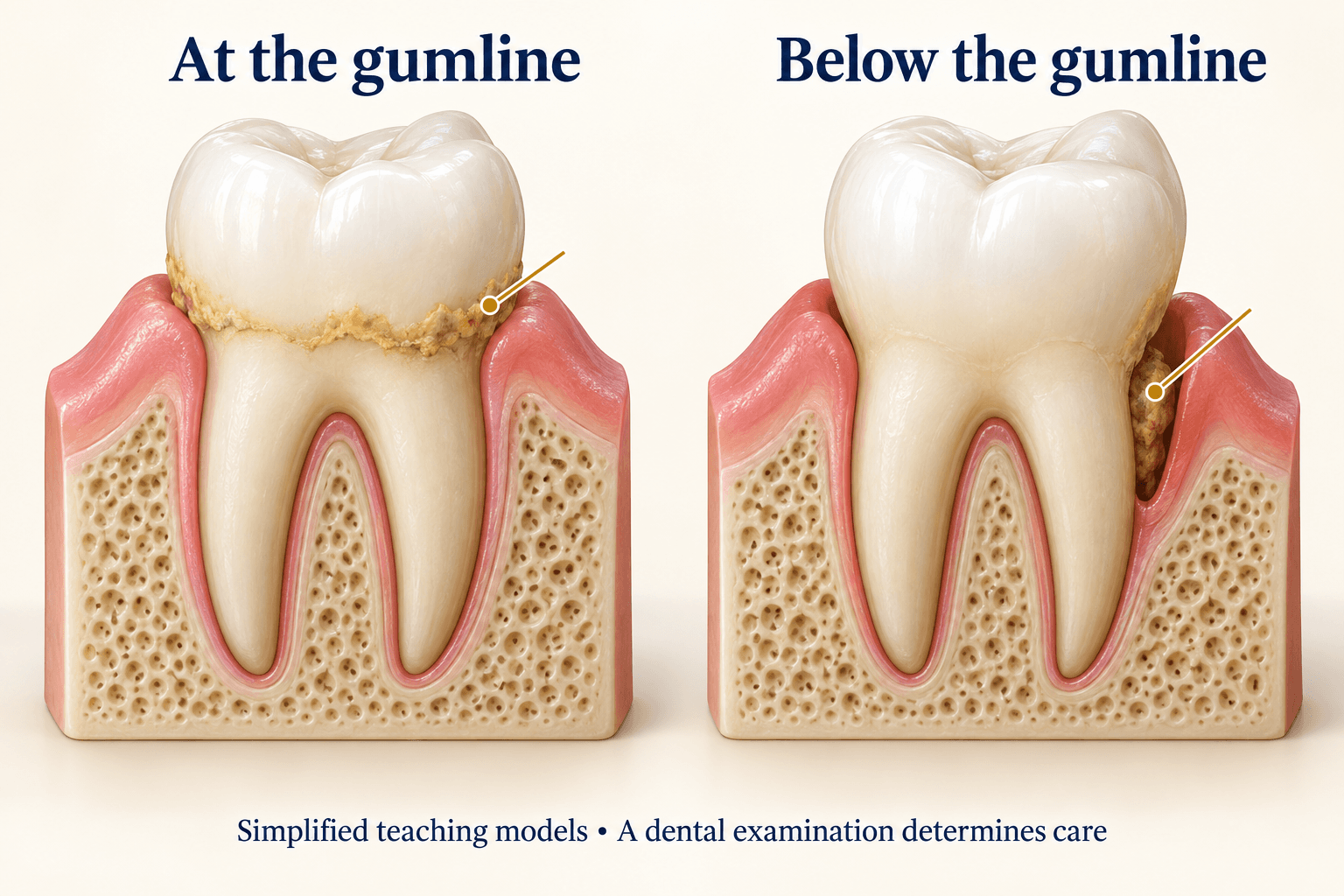
- 1. At the gumline
- 2. Below the gumline
Labels run left to right. AI-generated teaching illustration. A dental examination determines care. Simplified anatomy, not to scale.
Compare these options interactively
Hides rows with identical wording, not a clinical judgment that two options are equivalent. Selections stay on this page.
Comparing Routine cleaning with Periodontal treatment often called deep cleaning · 4 rows shown
Option ARoutine cleaning
Option BPeriodontal treatment often called deep cleaning
Why is it considered?
- Routine cleaning
- Preventive deposit removal and gum care
- Periodontal treatment often called deep cleaning
- Findings indicate a need to treat disease below the gumline
Is it a cosmetic upgrade?
- Routine cleaning
- No
- Periodontal treatment often called deep cleaning
- No; its purpose is treatment, not a whiter shade
What should I understand?
- Routine cleaning
- What the visit includes
- Periodontal treatment often called deep cleaning
- Which areas need treatment, comfort options and reassessment
What follows?
- Routine cleaning
- An individualized ongoing-care plan
- Periodontal treatment often called deep cleaning
- A response check and an ongoing maintenance plan
Keep the context
You booked a cleaning, but the dental team recommends something called a “deep cleaning.” It is reasonable to ask what changed. The difference is not simply…
Read the full guide and sourcesTake the comparison to your dentist
Availability and suitability need confirmation. An appointment request is not a confirmed booking.
You booked a cleaning, but the dental team recommends something called a “deep cleaning.” It is reasonable to ask what changed. The difference is not simply how polished your teeth will feel or how long you have waited between appointments. It is about the condition of the gums and the tissues supporting the teeth.
The most useful response is not to choose a cleaning from a menu. Ask the clinician to explain the findings, the goal of treatment and what follow-up will show whether it helped.
What the two descriptions usually mean
Routine teeth cleaning removes plaque and hardened deposits as part of preventive care. When gum disease involves deeper areas around tooth roots, treatment may include scaling and root planing, commonly called deep cleaning. It can involve numbing and more than one visit. ADA: scaling and root planing.
| Question | Routine cleaning | Periodontal treatment often called deep cleaning |
|---|---|---|
| Why is it considered? | Preventive deposit removal and gum care | Findings indicate a need to treat disease below the gumline |
| Is it a cosmetic upgrade? | No | No; its purpose is treatment, not a whiter shade |
| What should I understand? | What the visit includes | Which areas need treatment, comfort options and reassessment |
| What follows? | An individualized ongoing-care plan | A response check and an ongoing maintenance plan |
These are broad descriptions, not billing definitions or a way to diagnose yourself. The care needed can differ between areas in the same mouth.
Ask what the assessment showed
Request a plain-language explanation of gum measurements, bleeding, any imaging findings and the diagnosis. A single number or the amount of visible staining should not be the whole conversation. Ask to see which areas the team is concerned about and what would happen if treatment were delayed.
Early gum inflammation, called gingivitis, differs from periodontitis, which involves loss of supporting tissues or bone. Gum disease may cause few noticeable symptoms, so “it does not hurt” is not enough to establish gum health. ADA: gum disease.
The gum-disease treatment page introduces care options. Your own plan still depends on assessment rather than a general online description.
Comfort and follow-up belong in the plan
Before treatment, mention sensitivity, previous difficult cleanings and questions about numbing. Ask whether care will be divided into visits and what you should expect afterward. Do not assume that someone else's recovery timetable applies to you.
Reassessment matters because deposit removal is not the end of the decision. The clinician may remeasure the gums and discuss whether additional treatment is needed. Daily home care and continuing professional visits remain part of controlling gum disease. ADA: scaling and root planing.
Persistent bleeding deserves a dental assessment. New swelling, pus or worsening pain warrants a prompt call; difficulty breathing or swallowing or rapidly spreading swelling needs emergency medical care, not a cleaning appointment.
Three common questions
Does needing deep cleaning mean I failed? No. Ask for help understanding the findings and a realistic plan. A diagnosis should guide care, not become a label of blame.
Can I choose polishing instead? Polishing does not replace indicated periodontal treatment. Ask what each proposed step addresses before making a decision.
Will insurance decide which cleaning I need? Coverage and clinical need are different questions. Ask for an itemized estimate and separate clarification of your plan benefits.
You can arrange an examination or request an appointment to discuss the recommendation and your questions.
Sources
Understand what makes sense for you.
Bring your questions to Cedarbrae Dental Center in Scarborough. We can assess your needs and discuss appropriate options. An appointment request is not a confirmed booking.