
Orthodontics · Patient education
Invisalign or braces? Start with your bite and your routine
Compare clear aligners and fixed braces by suitability, daily routines, appointments and retention before choosing an adult treatment plan.
Clinically reviewed by Dr. Ghazala Zaid · 2026-09-13
Published
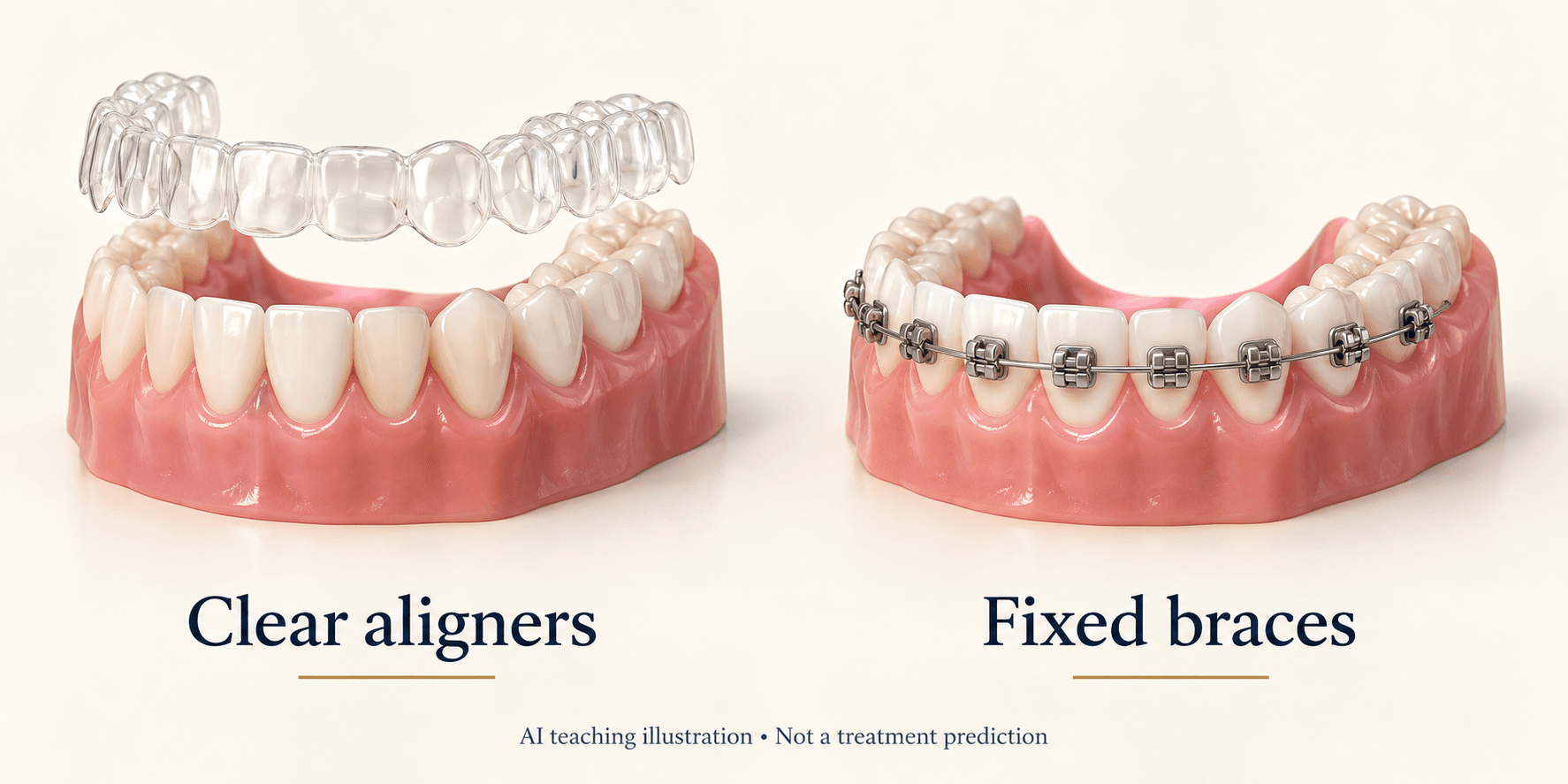
- 1. Clear aligner
- 2. Fixed braces
Labels run left to right. AI-generated teaching illustration. Simplified teaching concepts, not a diagnosis or treatment prediction.
Compare these options interactively
Hides rows with identical wording, not a clinical judgment that two options are equivalent. Selections stay on this page.
Comparing Clear aligners with Fixed braces · 4 rows shown
Option AClear aligners
Option BFixed braces
Can I remove them?
- Clear aligners
- Yes; follow the prescribed wear schedule
- Fixed braces
- Brackets and wires stay attached
What changes at meals?
- Clear aligners
- Remove trays as instructed and store them safely
- Fixed braces
- Follow advice about foods that can damage appliances
What needs cleaning?
- Clear aligners
- Teeth, spaces between teeth and trays
- Fixed braces
- Teeth and spaces around brackets and wires
What might be visible?
- Clear aligners
- Trays and any attachments or elastics
- Fixed braces
- Brackets, wires and any elastics
Keep the context
Compare clear aligners and fixed braces by suitability, daily routines, appointments and retention before choosing an adult treatment plan.
Read the full guide and sourcesTake the comparison to your dentist
Availability and suitability need confirmation. An appointment request is not a confirmed booking.
If you are considering straightening your teeth as an adult, the choice is not simply clear plastic versus metal. You need a plan that addresses your bite and fits the care you can realistically manage. Invisalign is one brand of clear aligners; fixed braces are another way to move teeth. Neither is automatically the right answer for everyone.
Bring two questions to your consultation: “What needs to change?” and “What would each suitable option require from me?” Our Invisalign information is a starting point, not a diagnosis or promise of results.
Compare the same treatment goal
A useful comparison begins with an examination, not an appliance photograph. Ask whether both proposed plans address the same teeth, bite concerns and finishing goals. If one plan is limited to a small cosmetic change while another tackles a wider bite problem, their prices and timelines are not directly comparable.
The American Association of Orthodontists explains that aligner suitability is individual and some cases may be treated more predictably with braces. Ask why the recommended method fits your situation and whether a specialist opinion would be helpful. Avoid assuming that “clear” means simpler treatment or that braces are only for teenagers.
Be honest about daily life
Both approaches involve ongoing cleaning and appointments. The practical differences can matter as much as appearance. This discussion table draws on the AAO comparison of braces and aligners.
| Daily question | Clear aligners | Fixed braces |
|---|---|---|
| Can I remove them? | Yes; follow the prescribed wear schedule | Brackets and wires stay attached |
| What changes at meals? | Remove trays as instructed and store them safely | Follow advice about foods that can damage appliances |
| What needs cleaning? | Teeth, spaces between teeth and trays | Teeth and spaces around brackets and wires |
| What might be visible? | Trays and any attachments or elastics | Brackets, wires and any elastics |
Think through work lunches, travel, school pickups and where you can clean your teeth. Being candid about those routines helps the clinician propose a workable plan. Read our braces information if you want to understand the fixed-appliance option before your visit.
Ask about the finish, not only the first tray
Request a written plan that explains reviews, possible adjustments to the original plan, retainers and what is charged separately. Ask what happens if you lose a tray, miss a visit or need additional treatment. A projected completion date is an estimate, not a guarantee.
Retention matters after either approach: the AAO describes retainers as part of maintaining alignment. Ask for your own wear and replacement instructions. For payment questions, distinguish the clinic estimate from your insurer’s response using our dental insurance help page.
Common questions
Are aligners always faster or more comfortable?
No single comparison predicts your experience. Ask about the proposed movements, expected discomfort and what could extend treatment in your case.
Can I choose using a digital preview?
A preview can help you discuss goals, but it is a plan illustration rather than a guarantee of the final appearance or treatment duration.
Will either option avoid retainers?
Do not assume so. Discuss retention before starting, including follow-up, care and the cost of replacing a lost or damaged retainer.
When you feel ready, request an appointment to discuss your questions. A request is not a confirmed booking, and you do not need to choose an appliance first.
Sources
- AAO: Clear aligners, checked 2026-09-13.
- AAO: Braces versus clear aligners, checked 2026-09-13.
- AAO: Retainers after orthodontic treatment, checked 2026-09-13.
Understand what makes sense for you.
Bring your questions to Cedarbrae Dental Center in Scarborough. We can assess your needs and discuss appropriate options. An appointment request is not a confirmed booking.